



CES 2012: Innovations in Communications Technologies

CES 2012 is just few days away and as always even this year some never heard before innovations will be unveiled at Las Vegas from 12-14th Jan. In this article we are throwing lights on exciting products in communications field that we might see at CES 2012.

Local area connectivity:

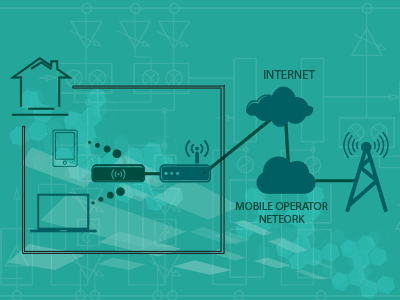
Wireless local area networks were confined to speed of 1Gbps as of now. But come CES 2012 and you will find implementations of 802.11ac by Buffalo, Broadcom and Redpipe which can offer data transfer speeds of 4Gbps. If 4Gbps is not enough for you then you might wanna have a look at Wilocity’s display of 802.11ad implementation which pushes data transfer speeds to 7Gbps.

These were the products which enhanced the underlying technology. Now let’s have a look at products which are using existing local area connectivity technologies in newer innovative way. Samsung’s Dual View Camera can send photos over wi-fi so no need to worry about memory getting full. Taztag is coming up with Tazpad which they claim is first NFC tablet in the market. Wohoo fitness has comeup with BlueHR product which when strapped on waist can monitor your heartbeats and send it over blueotooth to your iPhone and some other supported smartphones.

Apart from this Wi3 has come up with WiPNET which can convert traditional coax cable communications to Ethernet/WiFi based digital communication

Also NXP has planned some NFC demos where in use of NXP NFC chips for MCU and automotive applications will be displayed.

Our Favorite: Wilocity’s 802.11ad implementation

Sector Focus: Higher Speeds

Wide Area Connectivity:

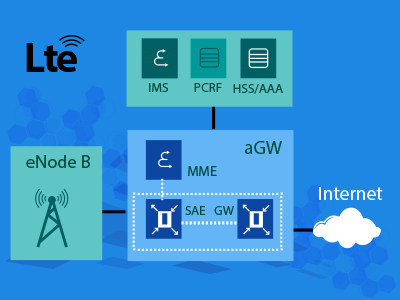
4G LTE based handset was introduced in CES 2011. This year WAC has gone one step ahead and Wilson Electronics has come up with Signal Booster for 4G LTE. Novatel wireless has developed MiFi which sets up mobile hotspots to which 4-5 devices can be connected. Pegastick has combined 4G 3G nd 2G i.e. EDGE, HSPA+ and LTE respectively on one USB datacard.OnStar is displaying prototype where in 4G LTE technology is optimized for use in automobiles.

Microsoft, Nokia, Samsung and HTC are expected to launch 4G LTE supporting headsets.

Our Favorite: Pegastick

Sector Focus: Integration and enhancement

pegastick.JPG

Cloud Based Services

Cloud based services seems like a theme of CES 2012, with number of conferences on cloud based services and many other products implementing it. Lenovo is gonna display functioning of its new cloud based storage system while Oplink Communications has come up with C4MI (Cloud for Mobile Interactive) which will allow sensors to access cloud enabling them to process outputs. Fordela has developed a platform for stream multimedia content over the cloud to any device. One outstanding innovation has come from Sanyo, product is called HyperDriveCloudFTP. When USB drive is connected to CloudFTP, drive can act as a wireless file server.

Our Favorite: CloudFTP

Sector Focus: Richer content on cloud

cloud-ftp.JPG

Written by:

Premraj Narkhede

Premraj is a Senior Business Research Analyst at Dolcera with expertise in communications and emerging technologies

[Post to Twitter] Tweet  [Post to Delicious] Delicious  [Post to Digg] Digg  [Post to Facebook] Facebook 

Sources of Apple’s Innovation

The Tech world is buzzing in 2011. Apple, Android, and Patents seems to the most recurring themes conversations converge too. Apple is a great success story, and literally becoming the apple of everyone’s eye by becoming one of the most valuable companies in the world, consistently innovating and generating higher and higher revenues. They recently posted one of their best quarters ever.

Many see Apple’s rise as a challenger to the Open Innovation theories, and positing that in technology a closed system offers you much more strength and sustainable innovation coming up with products which have completely re-shaped markets.

Of course Apple had a visionary in the form of Steve Jobs, but technologies don’t just develop “magically” and systems don’t just fall into “amazing” perfect tandem on their own. So, we at Dolcera decided to look into what exactly are the sources of Apple’s innovation.

Apple being a very secretive company, it was hard to find a lot of inside information. But one of the best sources of “innovation” data is the legal document which one gets for innovating - a patents. We decided to look at the patents of Apple and get an idea of the true sources of Apple’s innovation.

In our opinion, the key sources of Apple’s innovation are :
1. Expenditure on research,
2. Acquisitions, and
3. Patent Deals
Apple definitely has a strong in-house research. But every time Steve Jobs wished to make one of his “visions” a reality, it often required Apple to go out and spot “sources” which can be acquired, or taken the technology from. Some prime examples are acquisition of Fingerworks which developed the Multi-Touch for iPhone, and technology licensing from LiquidMetal which gave Apple products their great aesthetics among many others.

We have tried to provide a basic story flow in the visual below.

We are also conducting web seminars to detail on the findings of our research, and how you too can do the same. For details contact us at - info@dolcera.com

Sources of Apple's Innovation

 Author: Pramath Malik

[Post to Twitter] Tweet  [Post to Delicious] Delicious  [Post to Digg] Digg  [Post to Facebook] Facebook 

Need an Organ?? Print it!

What’s Organ printing? What’s Bioprinting? Does organ printing really mean what it says in itself?? Pr-in-ting organs?  What do these technologies have to offer? What would the implications of these technologies be on the state of the industry, the general public and the entire humanity? Let’s just break the fourth wall here.  Who’s asking??

Well…To clarify, we are asking these questions in the interest of and to interest the general public and if the latter isn’t lost already (we earnestly hope that is the case) please read up…

Creating living tissue in complex geometries is a challenging issue facing the tissue engineering community.  Traditional tissue engineering techniques result in living tissue of simple, often 2D geometries.  By harnessing the capabilities of Solid-Freeform Fabrication (SFF) – also known as Rapid Prototyping (RP) –living tissue of arbitrary 3D shapes can be created directly from computer-aided design (CAD) data.

Bio-printing is a variant of 3D printing and can be defined as computer-aided, automatic, layer-by-layer deposition, transfer, and patterning of biologically relevant materials.  It is also known by other names such as “computer aided tissue engineering” and “biofabrication”.  In simpler words, bioprinting involves printing devices that deposit biological material.

Organ printing is a variant of bio-printing aiming at producing 3D organs. This is among the most promising advances of regenerative medicine. The 3D- Bioprinter was listed among the TIME magazine’s 50 best inventions of 2010. Most of the 3D printers use a modified version of inkjet printers to deposit dots of “bio ink” (cell suspension with 10 to 30 thousand cells per drop) that coalesce to form layers of organ interrupted by layers of biopaper (hydrogel mimicking the microenvironment of tissue) which is water-soluble.

Step-by-Step process of Organ Printing

Fig1:- Step-by-Step process of Organ Printing [1]


Roadmap to Bioprinting

Roadmap to Bioprinting

Fig 2:- Roadmap to Bioprinting [2]

The 3D bioprinters currently in the market are produced by envisionTEC, Organovo, Tengion, Sciperio, Neatco, etc.

The NovoGen MMX 3D Bioprinter, priced at $200,000, has been developed by Organovo, a company in San Diego that specializes in regenerative medicine, and Invetech, engineering and automation firm in Melbourne, Australia. One of the founders of Organovo, Gabor Forgacs from the University of Missouri, Columbia, says the logic behind applying 3D printing for producing biological organs is “Although morphogenetic processes are under strict genetic control, genes do not create shapes and forms: physical mechanisms and processes do.” Organovo announced the production of first fully bioprinted blood vessels in Dec 2010. [3]

Organovo’s only real competitor, Tengion, holds most of the patents and legal rights to exploit the technology developed by the most successful bio printing scientist to date, Dr. Anthony Atala. Dr. Atala’s lab has grown a variety of human parts including blood vessels, heart valves and bladders, all using bio printing. Based on the same 3D print technology that Organovo uses, Tengion’s prototype printer has already produced several bladders which have been successfully transplanted into humans.

The 3D Bioplotter is produced by German company envisionTEC is a German company producing a range of 3D bioprinters such as 3D Bioplotter, E-Dent (Digital Dental printer), etc.  The 3D Bioplotter is priced at $188,000 and currently used in various laboratories to create various tissue scaffolds. [4]

Work of other research groups on Bioprinting:-

Boland and his coworkers from Clemson University have been producing Bioprinters since 2004.

VAXDesign of Sciperio Inc has a pressure operated 3D Bioprinter with four nozzles in the market.

Roland, Fishman, and Neatco collaboratively produce a pressure operated 3D Bioprinter with two nozzles. [1]

Professor Nakamura from the University of Toyama is currently working with Epson to produce 3D Bioprinters.

Sangeeta Bhatia from MIT together with Jennifer West from Rice University bioprinted living 3D liver constructs using stereolithography.

Tsinghua University group in China also printed liver construct using chitosan-collagen hydrogel.

A research group at Cornell University bioprinted living cartilage construct. [6]

The Bioprinting community meets annually at the International Conference on Bioprinting and Biofabrication. The next conference (the sixth) is to be held in Toyama, Japan in October 2011.

Future and Implications:-

Professor Vladimir Mironov, Director of Medical University of South Carolina(MUSC) , Bioprinting Center says that it would probably take an investment of  $1 billion to print living human organ suitable for clinical implantation.

Also, Dr. Atala says in vivo bioprinting i.e.; bioprinting right into a patient on the site of injury is very much feasible.

As Chair of The Department of Surgery of Stanford University and a leading expert in surgical innovation, Krummel recently wrote: “There is no such thing as a science fiction. There is only science eventuality”. [1]

Here’s to a future when Organ transplantation is hassle-free, affordable, automated, and customized.

Sources:-

1.       http://accessscience.com/content/Tissue-and-organ-printing/YB060455

2.       http://organprint.missouri.edu/PDF/HowToPrintOrgan-slides.pdf

3.       http://www.economist.com/node/15543683?story_id=15543683&subjectID=526354&fsrc=nwl

4.       http://www.envisiontec.de/index.php?id=8

5.       http://www.rapidtoday.com/future.html

Written by:

 Ajay S and Jnanasiddhy

[Post to Twitter] Tweet  [Post to Delicious] Delicious  [Post to Digg] Digg  [Post to Facebook] Facebook 

The Wellness Chip takes clinical diagnosis to newer heights

A simple blood test and there you go….your complete health profile!

Or are you worried about a family cancer history?

The benefit of early diagnosis of such a deadly disease is obvious. The answer is the Wellness Chip®.

Researchers at Somalogic, Inc. have developed a diagnostic technology with high sensitivity and specificity. The Wellness Chip, the brainchild of Larry Gold and his colleagues at Somalogic, will bring together diagnostic tests for various diseases in a single, simple blood test. Currently, Somalogic has licensed its technology to Quest Diagnostics for launching a lung cancer blood test before the end of this year.

What is the Wellness Chip?

The underlying principle is nucleic acid-aptamer based proteomic technology. Somalogic’s proprietary reagents called SOMAmers (Slow Off-rate Modified Aptamers) are single strand stretches of modified nucleic acids generated by a highly selective process called SELEX (Systematic Evolution of Ligands by Exponential Enrichment). SOMAmers are capable of binding specifically to a target of interest, e.g., a marker for a particular disease. SOMAmers to various targets are fabricated on a chip at distinct positions and simultaneously detect several proteins in micro-liter scale samples. This data will then be analyzed by bioinformatics tools.

Contrary to conventional antibodies based diagnostic procedures, SOMAmers are more sensitive and specific and can be made rapidly in weeks rather than months as is the case with antibodies. It will also be economically priced -$100’s not $1000’s.

Why blood test?

Proteins present in the blood are immediate indicators of a person’s state of health.  Diseased tissues secrete proteins in the blood and their identification is essential to early and accurate therapeutic and preventative measures. The total number of blood proteins is about 4000 and the Wellness Chip can detect 1100 of these blood proteins. This protein profile will be analyzed to determine the health status of the individual. Currently available methods detect only about 20 to 30 proteins at a time.

From the laboratory to the market-

The SOMAmer technology has already found its clients in the pharma industry. In 2008, Somalogic entered into research collaboration with Otsuka Pharmaceutical Co., Ltd. for the development of diagnostic tools and to further Otsuka’s research in pharmaceuticals. On the other hand, the task of making the Wellness Chip a reality is entrusted with Quest Diagnostics.

Sources:

1.      http://www.somalogic.com/

2.      Bio.IT World.com. Turning blood into gold: The Wellness Chip

3.      http://www.colorado.edu/mcdb/goldlab/Slide%20Decks/8.%20Steve%20Williams%20slides.pdf

4.      U.S. Patent No. 7709192

5.      Gold L, Ayers D, Bertino J, Bock C, Bock A, et al. (2010) Aptamer-Based Multiplexed Proteomic Technology for Biomarker Discovery. PLoS ONE 5(12): e15004

6.      Ostroff RM, Bigbee WL, Franklin W, Gold L, Mehan M, et al. (2010) Unlocking Biomarker Discovery: Large Scale Application of Aptamer Proteomic Technology for Early Detection of Lung Cancer. PLoS ONE 5(12): e15003.


Written by:

Shweta Kumari

[Post to Twitter] Tweet  [Post to Delicious] Delicious  [Post to Digg] Digg  [Post to Facebook] Facebook 

Ranking Patents on a Scorecard

Ranking makes life easier. Be it top 10 companies, top 10 universities to study technology or to choose amongst top 10 sci-fi movies you want to watch on the weekends; ranking allow us to choose the best amongst the available. Time saver, decision influencer and extremely helpful are the ranked material.

At Dolcera, we thought of applying the ranking methodology to patents. We have ranked patents based on a variety of parameters. First factor amongst all remains the client focus, second, sufficiency of disclosed information in patents and third credibility of a patent to perform the same process/art with higher efficiency than any other patent with similar focus.

Let us consider an example, the first table in the image below show patents with similar focus of decreasing tumor volume using RNA interference (RNAi). The patent one has disclosed maximum information in this area and in addition to the desired data, it has also published a lot more supporting information derived from other experiments. Further, as the rank goes down the percentage decrease in tumor volume decreases. Some may argue that patent 2 has disclosed more decrease in tumor volume than patent 1 but then patent 1 has disclosed more supporting data, taking its overall weighted score higher. Of course, if the client is still interested only in comparing tumor volume, patent at rank 2 will come at rank 1. Hence the ranking is customized to suit the client requirements.

rnai-image.png

The ranking of patents is not that simple as it may sound. The analysis team has to encounter challenges and figure out the ways to overcome them. Graphs, charts, instrumental outputs etc. will not give you data in percentages which can be just copy-pasted to compare. They have to be calculated first using mathematical tools which may vary from calculating areas under the graphs or applying differentiation & integration on instrumental outputs, to allow the reader to compare results before making the final decision. It’s considered an absolute value add to the decision making process by the clients who have sought such a service from us.

Not all experimental data will be quantitative. For people familiar with biotechnology would know that there are experiments (such as gel electrophoresis, staining etc.) that give qualitative or quasi-quantitative results. I am sure, the same will hold true with other technology fields too. Second part of the figure above summarizes few patents which can not be ranked as there is no data yield from such experiments and hence comparison is not possible. But then why miss them? We provide a Dolcera summary table which will give reader an idea as these experiments were atleast conducted and disclosed in patents. This comparison will thus strengthen the decision to be taken from ranking matrices discussed above.

This systemic approach of collecting, sorting, analyzing, and finally ranking the data has the following advantages:

1. Saves time!
2. Easy comparative analysis.
3. Helps in competitive watch
4. Decision on in-and-out licensing can be made.
5. Strong baseline for future scientific investigations.

Who will be benefited?

Scientific community: Extensive experimental data, comparison matrix of data from different patents with same focus is a feast to researchers and scientists as it helps them to choose best technologies.

Patent attorneys: Allows competitor watch, supports their decision on in and out licensing.

Venture capitalists / investors: Patent ranking based on disclosed information helps investors to decide patents to further invest upon.

Which technology fields are covered?

Patents in all the technological fields can be ranked. You just need to tell us the focus area and we will rank the patents for you. The ranking and weighing scores can be customized to suit user’s requirements.


[Post to Twitter] Tweet  [Post to Delicious] Delicious  [Post to Digg] Digg  [Post to Facebook] Facebook 

Use of honey in vascular closure devices for better protection from contamination and quick hemostasis

Concerns:
Access site closure seems technically simple in theory, but in reality has proven challenging. For clinicians, the ideal product needs to work quickly and easily every time, and be simple enough for a nurse or technician to use. The ideal product must not embolize in the body, or elicit an unwanted biological reaction. In the worst case, failure of the ideal closure product should always leave the option of manual compression. All first-generation devices fall short on at least one of these criteria, with safety concerns heading the top of the list. Second generation devices face high technical hurdles and need to address the shortcomings of earlier devices.

The healing powers of honey:
Most people think of honey as something that is to be spread on bread, but few realized how many uses it has. Its unique properties mean that it is found in foods, cosmetics, and it even has a place in health care and healing.

Honey has been used for its healing properties for over four thousand years. The Egyptians had over 500 medical formulas based on it whilst the Greeks used it to cure skin disorders. Recent research has shown that they might have had the right idea.

How honey can heal:
Research being carried out around the world suggests that honey helps in the healing and sterilizing of wounds and ulcers, in the growth of new skin, and, has many antimicrobial and antibacterial properties. The reason for this is the unique combination of properties that honey has.

* Help in the growth of new tissue
* Stop bandages from becoming stuck to an open wound if applied to the bandage before use

New tissue growth factor could be vital for achieving safe and quick hemostasis.

Solution:
Use of honey with plug or sealing composition could help in quick and safe hemostasis since it has the property with help in new tissue growth.

[Post to Twitter] Tweet  [Post to Delicious] Delicious  [Post to Digg] Digg  [Post to Facebook] Facebook 

Posted in Ideas. No Comments »

Tweet links powered by Tweet This v1.4.1, a WordPress plugin for Twitter.