



CES 2012: Innovations in Communications Technologies

CES 2012 is just few days away and as always even this year some never heard before innovations will be unveiled at Las Vegas from 12-14th Jan. In this article we are throwing lights on exciting products in communications field that we might see at CES 2012.

Local area connectivity:

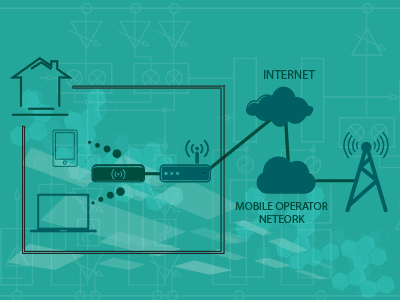
Wireless local area networks were confined to speed of 1Gbps as of now. But come CES 2012 and you will find implementations of 802.11ac by Buffalo, Broadcom and Redpipe which can offer data transfer speeds of 4Gbps. If 4Gbps is not enough for you then you might wanna have a look at Wilocity’s display of 802.11ad implementation which pushes data transfer speeds to 7Gbps.

These were the products which enhanced the underlying technology. Now let’s have a look at products which are using existing local area connectivity technologies in newer innovative way. Samsung’s Dual View Camera can send photos over wi-fi so no need to worry about memory getting full. Taztag is coming up with Tazpad which they claim is first NFC tablet in the market. Wohoo fitness has comeup with BlueHR product which when strapped on waist can monitor your heartbeats and send it over blueotooth to your iPhone and some other supported smartphones.

Apart from this Wi3 has come up with WiPNET which can convert traditional coax cable communications to Ethernet/WiFi based digital communication

Also NXP has planned some NFC demos where in use of NXP NFC chips for MCU and automotive applications will be displayed.

Our Favorite: Wilocity’s 802.11ad implementation

Sector Focus: Higher Speeds

Wide Area Connectivity:

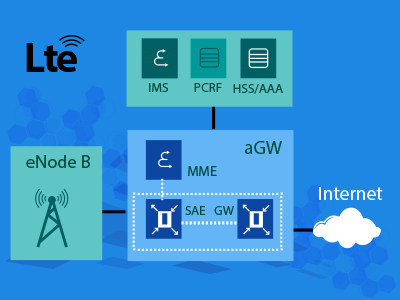
4G LTE based handset was introduced in CES 2011. This year WAC has gone one step ahead and Wilson Electronics has come up with Signal Booster for 4G LTE. Novatel wireless has developed MiFi which sets up mobile hotspots to which 4-5 devices can be connected. Pegastick has combined 4G 3G nd 2G i.e. EDGE, HSPA+ and LTE respectively on one USB datacard.OnStar is displaying prototype where in 4G LTE technology is optimized for use in automobiles.

Microsoft, Nokia, Samsung and HTC are expected to launch 4G LTE supporting headsets.

Our Favorite: Pegastick

Sector Focus: Integration and enhancement

pegastick.JPG

Cloud Based Services

Cloud based services seems like a theme of CES 2012, with number of conferences on cloud based services and many other products implementing it. Lenovo is gonna display functioning of its new cloud based storage system while Oplink Communications has come up with C4MI (Cloud for Mobile Interactive) which will allow sensors to access cloud enabling them to process outputs. Fordela has developed a platform for stream multimedia content over the cloud to any device. One outstanding innovation has come from Sanyo, product is called HyperDriveCloudFTP. When USB drive is connected to CloudFTP, drive can act as a wireless file server.

Our Favorite: CloudFTP

Sector Focus: Richer content on cloud

cloud-ftp.JPG

Written by:

Premraj Narkhede

Premraj is a Senior Business Research Analyst at Dolcera with expertise in communications and emerging technologies

[Post to Twitter] Tweet  [Post to Delicious] Delicious  [Post to Digg] Digg  [Post to Facebook] Facebook 

How much money does Universal Display Corporation really make?

Universal Display Corporation announced its financial results for the third quarter of 2011 in the past week. This is the first release of financial information that Universal Display Corporation has made since it signed a new agreement with Samsung Mobile Display. Dolcera presents an analysis of the announcement and the events surrounding it.

Universal Display Corporation reports its revenues in two segments: commercial revenue and developmental revenue. Commercial revenue relates to the incorporation of the company’s OLED technologies and materials into its customers’ commercial products, and includes commercial chemical revenue, royalty and license revenues, and commercialization assistance revenue. Developmental revenue related to OLED technology and material development and evaluation activities for which the company is paid, and includes contract research revenue, development chemicalrevenue and technology development revenue. Here, we mainly look at the commercial revenue of Universal Display Corporation.

Commercial revenue is reported in three parts: commercial chemical revenue, royalty revenue and license fees. In the results of third quarter of 2011, the revenue from royalty and license fees have been reported together. Unfortunately, since the past two years, Universal Display Corporation has been reporting only the change in revenues in each of these categories instead of the actual revenue figures. Some financial results announcements in the past have failed to provide quarterly information at all, instead providing information for the past 9 months or the past year as a whole.

Using historical financial results, we have reconstructed the commercial revenue earned by Universal Display Corporation in the three categories. The following table shows the quarterly commercial revenue by category in the past 5 years:

Quarter

Total
Commercial Revenue

Commercial
Chemical Revenue

Royalty
Revenue

License
Fees

Q1 ‘07

$1,440,900

$1,313,000

$0

$127,900

Q2 ‘07

$392,926

$229,631

$31,395

$131,900

Q3 ‘07

$1,368,201

$1,185,050

$16,051

$167,100

Q4 ‘07

$1,226,021

$871,996

$13,871

$340,154

Q1 ‘08

$1,555,065

$985,560

$267,565

$301,940

Q2 ‘08

$1,395,487

$938,330

$176,447

$228,570

Q3 ‘08

$1,324,924

$1,025,000

$148,261

$151,663

Q4 ‘08

$1,355,282

$803,000

$204,565

$232,959

Q1 ‘09

$1,369,137

$686,165

$278,179

$237,895

Q2 ‘09

$1,239,056

$569,600

$257,959

$244,600

Q3 ‘09

$1,621,416

$808,200

$401,718

$244,600

Q4 ‘09

$1,888,490

$705,900

$623,699

$367,676

Q1 ‘10

$1,830,147

$728,400

$565,877

$344,655

Q2 ‘10

$1,951,892

$841,170

$591,523

$327,984

Q3 ‘10

$2,836,587

$1,642,600

$810,017

$244,600

Q4 ‘10

$4,511,121

$2,527,500

$1,503,647

$177,532

Q1 ‘11

$4,744,075

$1,864,485

$1,796,705

$871,965

Q2 ‘11

$5,278,704

$2,402,130

$1,753,685

$911,970

Q3′11

$9,881,553

$5,107,213

$4,615,245

Source: Company filings

As expected, the revenues have shown a huge jump in the last quarter. Much of this can be attributed to the new agreement between Universal Display Corporation and Samsung Mobile Display. This agreement runs till 2017.  For the first time, Universal Display Corporation has explicitly mentioned the exact revenue it has received from Samsung Mobile Display from license fees. The company has received $3,246,315 from Samsung Mobile Display under its license agreement so far.

Apart from licensing fees, the agreement also increases the commercial chemical sales of Universal Display Corporation. Under the 2005 agreement, the company was the supplier of red PHOLED materials to Samsung Display Corporation. With the August 2011 agreement, Universal Display Corporation now supplies both red and green PHOLED materials to Samsung Display Corporation. Prior to August, Samsung Display Corporation sourced green PHOLED materials from Duksan, a Korea based company. There are no competing manufacturers of red and green PHOLED materials. The new agreement effectively doubles the per unit chemical sales of Universal Display Corporation.

In the following section we calculate the revenue that Universal Display Corporation receives from each display unit sold. All calculations have been performed using publically available data.

In the third quarter of 2010, 413.20 million mobile phone display units were shipped amounting to total revenue of $ 3,380 million. AMOLED display panels had a revenue share of 10.7% of the mobile display market. This results in the AMOLED mobile display panel revenue to be $ 361.66 million. The volume of AMOLED displays was 13.5 million units. In the AMOLED display market, Samsung Mobile Display had a market share of 98.3%. Thus, Samsung Mobile Display sold 13.27 million AMOLED display units and revenue from AMOLED displays units was $ 355.51 million. (Source: DisplaySearch)

Universal Display Corporation announces in all its filings that Samsung Mobile Display is the chief source for all of its commercial revenue. We consider that Samsung Mobile Display is solely responsible for all of Universal Display Corporation’s commercial revenue. The assumption is reasonable given that the period under study is the third quarter of 2010 when Samsung Mobile Display was the only major customer of Universal Display Corporation.

Universal Display Corporation’s royalty revenue for the fourth quarter of 2010 was $ 1,503,647 million. The royalty revenue is considered from the fourth quarter as royalty is paid by Samsung Mobile Display for goods sold in the previous quarter. As calculated earlier, Samsung Mobile Display’s third quarter 2010 revenue from sale of AMOLED display panels was $ 361.66 million. The royalty rate for the agreement between Universal Display Corporation and Samsung Mobile Display thus works out to be 0.423%.

The total number of AMOLED display units sold by Samsung Mobile Display in the third quarter of 2010 was 13.27 million. The royalty received by Universal Display Corporation for these units was $ 1,503,647 million. Thus, the royalty revenue per unit is $0.1133. The chemical sales revenue of Universal Display Corporation for the third quarter of 2010 was $1,642,600. Thus, the chemical sales revenue per unit is $0.1238. The key assumption in this case that the PHOLED material inventory levels of Samsung Mobile Display did not significantly change during the period.

The total revenue that Universal Display Corporation received from sale of each mobile display unit is $0.2371. It is to be noted that the period considered in this analysis is the third quarter of 2010 which is prior to the signing of the new agreement between Universal Display Corporation and Samsung Mobile Display. The August 2011 agreement doubles the chemical sales revenue per unit of AMOLED display panel sold for Universal Display Corporation. Thus, Universal Display Corporation receives $0.3609 for each AMOLED mobile display sold.

The above scrutiny only covers a part of an exhaustive industry analysis. For a detailed analysis of the subject matter, write to us at: info@dolcera.com

Written by: Kunal Krishna

Kunal is a Senior Business Research Analyst at Dolcera with expertise in cleantech and emerging technologies

[Post to Twitter] Tweet  [Post to Delicious] Delicious  [Post to Digg] Digg  [Post to Facebook] Facebook 

The Great Auto Electrification Race

Electric cars have been around for quite some time but taking forever to become a mainstream way of life. With the increased awareness about global warming, greenhouse gases, and rising gas prices there are stronger and stronger incentives every year for them to become a reality.

The US government, and auto industry have realized the same and thus you see the likes of the Chevy Volt (beautiful car, and love the ad) especially coming with a tax credit of 7.5 K on electric cars pitting them very competitively in the 20-30K range. California, and some other states provide a further subsidy of 5K i.e. 12.5K the government is spending on incentivising every electric car.

Which is great, but US is not the only country which has woken up to the reality. US contributes to about 17% of the greenhouse emissions globally, but China contributes about 24%. The Chinese government has realized the importance of Clean Tech and investing heavily into the same already being the biggest market for Wind Energy, and expected to leapfrog US & Europe in Electric Car penetration.

The electrification race has been compared by many to the space race in the 60s, and if that is true US is losing out. China has 120 domestic car companies compared to US’s 13, and there are 33,200 employees working in Lithium battery industry in China compared to 1,100 in the US. But the most important part is the money the Chinese government is putting behind the industry. US govt has decided to invest 5 Bn USD, but the Chinese government is pumping 17 Bn USD.

China is also being slightly smarter (or cunning) about how it gives the money away, they now have 19,300 USD in subsidies on each electric vehicles. GM has decided to develop cars in China with it’s partner SAIC. This combined with the fact that gasoline is twice as expensive in China than in US explains a lot. China has a lot of coal, and able to produce electricity cheaper. It is not just about a more sustainable option environmentally but also economically.

The catch though is China realizes that it is set to be the biggest Auto market in the world (GM already sells more cars in China than in the US), and that it has a lot of bargaining power in allowing foreign players to play in China. It is asking for technology transfer in one of the three core technologies
1. Electric Motors
2. Complex Electronic Controls
3. Power Storage Devices (whether batteries or fuel cell)
to qualify for the subsidy.

This is the same way China built it’s industries in big industries like Wind Turbines, High Speed Trains, and Water Purification.

It’s not a bad deal for the players also, China is hoping to have 5 Mn electric cars on roads by 2020, assuming that GM can get 15-20% market share i.e. 14.475 Bn USD in licensing for the technology! This is thus a model where those confident on their success would be more than happy to share, while others will prefer to stay out e.g. Nissan

By: Pramath Malik

[Post to Twitter] Tweet  [Post to Delicious] Delicious  [Post to Digg] Digg  [Post to Facebook] Facebook 

Sources of Apple’s Innovation

The Tech world is buzzing in 2011. Apple, Android, and Patents seems to the most recurring themes conversations converge too. Apple is a great success story, and literally becoming the apple of everyone’s eye by becoming one of the most valuable companies in the world, consistently innovating and generating higher and higher revenues. They recently posted one of their best quarters ever.

Many see Apple’s rise as a challenger to the Open Innovation theories, and positing that in technology a closed system offers you much more strength and sustainable innovation coming up with products which have completely re-shaped markets.

Of course Apple had a visionary in the form of Steve Jobs, but technologies don’t just develop “magically” and systems don’t just fall into “amazing” perfect tandem on their own. So, we at Dolcera decided to look into what exactly are the sources of Apple’s innovation.

Apple being a very secretive company, it was hard to find a lot of inside information. But one of the best sources of “innovation” data is the legal document which one gets for innovating - a patents. We decided to look at the patents of Apple and get an idea of the true sources of Apple’s innovation.

In our opinion, the key sources of Apple’s innovation are :
1. Expenditure on research,
2. Acquisitions, and
3. Patent Deals
Apple definitely has a strong in-house research. But every time Steve Jobs wished to make one of his “visions” a reality, it often required Apple to go out and spot “sources” which can be acquired, or taken the technology from. Some prime examples are acquisition of Fingerworks which developed the Multi-Touch for iPhone, and technology licensing from LiquidMetal which gave Apple products their great aesthetics among many others.

We have tried to provide a basic story flow in the visual below.

We are also conducting web seminars to detail on the findings of our research, and how you too can do the same. For details contact us at - info@dolcera.com

Sources of Apple's Innovation

 Author: Pramath Malik

[Post to Twitter] Tweet  [Post to Delicious] Delicious  [Post to Digg] Digg  [Post to Facebook] Facebook 

Google Acquires Motorola Mobility to Fortify its Presence in the Mobile Market

Google Inc., the Internet giant, has signed a $12.5 billion agreement to acquire Motorola Mobility, the legendary mobile phone and set-top box manufacturer. As per the agreement, Google will pay $40 per share in cash, which was a 63% premium to the closing price of Motorola Mobility shares on August 12, 2011.

But what is impressive about the deal is the purpose behind it. After all, Google generates its revenue from searches i.e. it auctions off search words to clients that want to advertise alongside the responses. On the other hand, Motorola Mobility manufactures handsets and set-top boxes that carry TV channels to homes. Interestingly, Motorola Mobility is the No.2 provider of set-top boxes after Cisco.

So why an Internet mogul be interested in acquiring a hardware company?

The key to the story is Android, Google’s OS for mobile devices. At present, Android has surpassed Apple and Nokia smart phones and already has signed deals with 39 handset manufacturers such as Samsung, HTC, LG Electronics, Sony Ericsson, etc. As we can see from this, Google is not just an Internet-based company but is part of the mobile business in full swing. Although Google offers the Android OS for free to handset manufacturers, it is a cynosure when it comes to patent infringement lawsuits. Companies from the likes of Microsoft, Oracle, and Apple have filed multiple lawsuits against Android.

As a result, in a bid to strengthen its patent portfolio, Google has acquired Motorola’s 17,000 patents (Click here for information on Motorola Mobility’s patent portfolio). The acquisition not only eliminates Motorola from being a potential threat in terms of filing a lawsuit but also arms Google so that it can defend itself in lawsuits as well as launch suits of its own.

In a latest turn of events, just last week HTC, the Chinese handset manufacturer, filed a patent infringement lawsuit against Apple. As per the appeal, HTC stated that Apple was infringing nine US patents related to wireless communications and mobile phone displays. The interesting bit is that Google had assigned those patents to HTC and some of those patents it had acquired from Motorola Mobility.

The ownership pathway for the nine patents is shown below.

The first five patents were used to strengthen HTC’s Delaware suit against Apply while the other four have been used for a new lawsuit against apple.

Patent Ownership Pathway

S.No

Patent No.

Title

1

US6473006 Method and apparatus for zoomed display of characters entered from a telephone keypad

2

US6708214 Hypermedia identifier input mode for a mobile communication device

3

US6868283 Technique allowing a status bar user response on a portable device graphic user interface

4

US7289772 Technique allowing a status bar user response on a portable device graphic user interface

5

US7020849 Dynamic display for communication devices

6

US5418524 Method and apparatus for over-the-air upgrading of radio modem application software

7

US5630152 Communication protocol between master and slave device with register information sharing

8

US5630159 Method and apparatus for personal attribute selection having delay management method and apparatus for preference establishment when preferences in a donor device are unavailable

9

US5302947 Method and apparatus for loading a software program from a radio modem into an external computer

Clearly, Google is out to avenge the lawsuits against its adopted child Android and defend itself in any way.

In addition, the other side of the story is the set-top box business, the acquisition of which will facilitate Google becoming a significant supplier of Internet-borne TV content on Android-equipped mobile devices and also generate revenues from TV advertising, which is worth $70 billion.

In all, Google’s deal with Motorola Mobility is not just a defensive action against infringement lawsuits but also a smart move in terms of boosting its ad revenues from Internet-borne TV content.

Author: Charanjeet Singh

[Post to Twitter] Tweet  [Post to Delicious] Delicious  [Post to Digg] Digg  [Post to Facebook] Facebook 

Broadcom acquires Netlogic

Broadcom plans to acquire chipmaker Netlogic Microsystem, a maker of networking equipment. At USD 50 per share, Broadcom has agreed to invest 3.7 Bn USD in the deal. This is the biggest acquisition by Broadcom hence has many scratching their heads to understand the motivations of Broadcom, and their future plans as Broadcom has agreed to pay a 57% premium over the closing price on September 9th, 69% premium over average trading price for last 20 days.

Strategically, CEO Scott McGregor stated that the deal will double Broadcom’s market in networking equipment, which takes a substantial 23% share of their sales.

Financially it seems to make sense, as Netlogic has higher gross margin (55%) than Broadcom (52%), and the deal is expected to increase EPS (earning per share) by 10 cents as claimed by Broadcom.

Netlogic is known for it’s processors which help transfer multimedia (video), and other data over the internet efficiently. With a surge in consumption of data due to smartphones, and requirements of these has been on a rise.

This in effect is thus one of the three biggest deals caused by “smartphone phenomenon” with the other two being
1. Nortel patent portfolio sale for 4.5 Bn USD
2. Google’s acquisition of Motorola Mobility for 12.5 Bn USD

The exorbitant price tags associated with all of these deals have shocked many. So while Nortel, and MMI had patents being the primary asset, we decided to dig into Netlogic’s patent portfolio.

Patent by Priority year

Patents published every year

Netlogic though not a giant portfolio like Nortel, has been slowly chugging about and innovating in the areas of :
1. Accessing, addressing or allocating withing memory systems or architectures
2. Associative or content-addressed stores
3. Transmission of digital information
4. Methods for processing data
5. Digital computing or data processing equipment for specific functions

Patent Taxonomy for NetLogic

These are closely related to the knowledge-based processors, multi-core embedded processors, and digital front-end processors which Netlogic will bring to Broadcom.

Some of the key patents of Netlogic too are in these areas. The 5 most cited documents of Netlogic are as following :
1. US6154384 - Ternary content addressable memory cell -  119 patent citations
2. US6237061 - Method for longest prefix matching in a content addressable memory - 117 patent citations
3. US6137707 - Method and apparatus for simultaneously performing a plurality of compare operations in content addressable memory device - 105 patent citations
4. US6317350 - Hierarchical depth cascading of content addressable memory devices - 64 patent citations
5. US6240485 - Method and apparatus for implementing a learn instruction in a depth cascaded content addressable memory system - 52 patent citations

Broadcom has 214 patent families in IPC classes G06F 12, and G11C 15. And it gains 106 patent families from Netlogic. These two are the key technology areas in which the patents of NetLogic fall.

But besides the intellectual assets, Broadcom is also gaining the employee, among whom will be prolific inventors :

Key inventors at NetLogic

Given the trend of increasing data consumption, the move makes perfect sense from Broadcom’s perspective. Wether 3.7 Bn USD is a fair price, only time will tell

Author: Pramath Malik

[Post to Twitter] Tweet  [Post to Delicious] Delicious  [Post to Digg] Digg  [Post to Facebook] Facebook 

Apple veering away from Samsung for supplies of A6 processors from 2012

Samsung had been a long term supplier for Apple Inc for the products -LCD screens, flash memory & processors for mobile devices. In January 2011, Apple Inc placed an order on Samsung for mobile processors, forcing Samsung to quadruple their capacity from 5,000 sheets of chips a month to20, 000 sheets of chips a month. In Feb 2011, Apple Inc and Samsung signed a deal worth $7.8B for supplying various components. In Apr 2011, Apple Inc filed a law suit against Samsung, alleging that Samsung copied the design of its mobile devices and developed Galaxy series of mobiles. The Taiwan Semiconductor Manufacturing Company (TSMC) may hamper the chances of Intel introducing world’s first 3D chips into the market, bringing the chip to the market towards the end of 2011 before Intel. Industry sources suggest that Apple Inc is going to place orders on TSMC for A6 processors towards mid 2012 shunning Samsung which is the present supplier of A4 & A5 processors for mobile devices.

What is happening?

Apple Inc has been known throughout the history of the company for multi-pronged strategy resulting in destroying the competition, superior technology and increasing the shareholder value under the hegemony of Steve jobs, the founder. The company usually attacks from all the directions to maintain its position in the market. It is evident from the sequence of events detailed above; that the strategy of Apple Inc is slowly evolving in the fast changing technical environment.

The following strategic reasons of Apple Inc may help us understand the situation better,

  1. To protect their IP with preemptive attacks on competitors and also to have a preview of the future products of Samsung.
  2. To maintain the secrecy of new launches and generate curiosity among the public about new launches. Basically, Apple is thriving on the hype generated for its smart phones and other devices apart from bringing breakthrough technologies into the market.
  3. To reduce the costs of manufacturing as TSMC is cheaper than Samsung. TSMC is a contract manufacturer of chips. They are not a threat to Apple Inc.
  4. Samsung is coming out with products which are in direct competition with Apple’s products.
  5. Apple Inc might be looking to launch a new product altogether .The details of new product has to be kept secret (Not allowing any reverse engineering efforts from Samsung).
  6. Protection of position in highly lucrative smart phones market. Apple Inc has always been ahead of competitors in terms of features of products compared to the cost.
  7. Increase the manufacturing capacity of Samsung by placing bulk orders and then withdrawing from the relationship such that Samsung is left with additional capacity. Samsung will then be forced to use this capacity by bringing out products without proper planning.
  8. As TSMC is coming out with 3D chips with higher performance to power consumption ratio, future mobile devices of Apple Inc might be using the 3D chips manufactured by TSMC. 

Then, what are drawbacks and risks associated with this strategic direction?

  1. For supplies of other products like LCD panels, Apple is still dependent on Samsung. With already strained relationships, there might be a threat from Samsung with abrupt or delayed supplies of these essential components.
  2. Samsung is free to use the additional capacity for bringing out their own products if they have already anticipated Apple Inc’s move.
  3. With the relationship between the two giants hanging on a thin thread, we may witness more law suits like Samsung trying to ban import of Apple products and Apple suing Samsung for design copy in the near future.

[Post to Twitter] Tweet  [Post to Delicious] Delicious  [Post to Digg] Digg  [Post to Facebook] Facebook 

Carbon nanotubes patent landscape and market research report

Oracle sues Google for patent and copyright infringement

Oracle sued Google on its famous operating system ‘Android’. Oracle says Google infringed patents on its Java software platform while developing Android and also violated the copyrights owned for Java platform (including without limitation code, specifications, documentation and other materials) by Oracle.

The following is a brief background on this news and a summary along with patent numbers to digest.

Oracle acquired Sun Microsystems on January 27, 2010. Sun is now Oracle America, a subsidiary of Oracle. Oracle acquired the Java technology from Sun. Android competes with Java as “an operating system software platform for cellular telephones and other mobile devices” and that the Android stack employs Java apps running on a Java-based object oriented application framework and core libraries running on a “Dalvik” virtual machine that features just in time (JIT) compilation.
Android (including without limitation of the Dalvik virtual machine and the Android software development kit) and devices that operate Android infringe one or more claims of each of the following US patents.
US6125447A-Protection domains to provide security in a computer system
US6192476B1-Controlling access to a resource
US6192476B1-Method and apparatus for pre-processing and packaging class files
US7426720B1-System and method for dynamic preloading of classes through memory space cloning of a master run-time system process
USRE38104E1-Method and apparatus for resolving data references in generated code
US6910205B2-Interpreting functions utilizing a hybrid of virtual and native machine instructions
US6061520A-Method and system for performing static initialization

Source: Oracle Google Complaint

[Post to Twitter] Tweet  [Post to Delicious] Delicious  [Post to Digg] Digg  [Post to Facebook] Facebook 

Smell your credit cards to make transactions

Well, we have all heard about simple fingerprint and retinal scans to voiceprints, facial and vascular pattern recognition to DNA verification. The credit card transaction in future will go “smell way.” On an attempt to snuff out credit card fraud, US patent 7,497,375 takes transaction authorization to the next logical step “olfactory biometrics.”

“… olfactory biometrics may include odorants that a body generates when odor evaporates from and/or any portion thereof. As discussed herein, these odorants may be collectively referred to as a “smellprint.” Biometric security system 2202 may include a biometric sensor 2204 which may be configured with an electronic sensor, a chemical sensor, and/or an electronic or chemical sensor configured as an array of chemical sensors, wherein each chemical sensor may detect a specific odorants, or smell. In another embodiment, biometric sensor 2204 may be configured as a gas chromatograph, spectrometer, conductivity sensor, piezoelectric sensor and/or other hardware and/or software that facilitates the capture of biometric data from the person such as, for example, scanning, detecting or otherwise sensing a smellprint of cardmember.”

Issued last March but claiming a priority date of July 1, 2004, the ‘375 patent is a member of a larger biometric security family Bonalle and American Express have raised.

- Harit Mohan
Knowledge Scientist,
Dolcera

Click here to read complete article: Source

Smell your credit cards to make transactions

Smell your credit cards to make transactions

[Post to Twitter] Tweet  [Post to Delicious] Delicious  [Post to Digg] Digg  [Post to Facebook] Facebook 

Tweet links powered by Tweet This v1.4.1, a WordPress plugin for Twitter.