



Social Media and networking websites have affected the life of people in one way or the other. Simply put, we are all hooked by these websites. We at Dolcera thought that it may be interesting to make a preliminary research on the social media to find their nexus with the patenting fraternity. This blog post is mainly to share the preliminary research with our readers.
The following graph shows the IP activity over the last few years. There is certainly an upward trend since 2004 however, the year 2008 & 2009 IP activity could be marred by the Bilski repercussions on the business method patents among other reasons. It is also to be noted that 2009 data is not up to date owing to the data unavailability.
The following graph shows the IPC classes that were taken into the consideration while doing the search.
The following graph shows the patent assignee information in this field.
Note: The patent counts for some of the prominent social media websites are Facebook(48) and Myspace & Technorati with just less than 20 each.
Finally, I would like to thank my colleagues Harit Mohan & Samir Raiyani for their help in this exercise.
James Watson was on Charlie Rose last night. He made some very interesting points:
- In the 21st century, psychology will finally become a science
- The genetics of psychological disorders such as schizophrenia, bipolar disorder etc. is not understood at all, and very little investment is going into these fields
- We need a fight against psychological disorders on the same scale as the fight against cancer
- A lot has been learned in the fight against cancer (from the billions spent), and a cure for cancer seems to be closer than ever
Ranking Patents on a Scorecard
Ranking makes life easier. Be it top 10 companies, top 10 universities to study technology or to choose amongst top 10 sci-fi movies you want to watch on the weekends; ranking allow us to choose the best amongst the available. Time saver, decision influencer and extremely helpful are the ranked material.
At Dolcera, we thought of applying the ranking methodology to patents. We have ranked patents based on a variety of parameters. First factor amongst all remains the client focus, second, sufficiency of disclosed information in patents and third credibility of a patent to perform the same process/art with higher efficiency than any other patent with similar focus.
Let us consider an example, the first table in the image below show patents with similar focus of decreasing tumor volume using RNA interference (RNAi). The patent one has disclosed maximum information in this area and in addition to the desired data, it has also published a lot more supporting information derived from other experiments. Further, as the rank goes down the percentage decrease in tumor volume decreases. Some may argue that patent 2 has disclosed more decrease in tumor volume than patent 1 but then patent 1 has disclosed more supporting data, taking its overall weighted score higher. Of course, if the client is still interested only in comparing tumor volume, patent at rank 2 will come at rank 1. Hence the ranking is customized to suit the client requirements.
The ranking of patents is not that simple as it may sound. The analysis team has to encounter challenges and figure out the ways to overcome them. Graphs, charts, instrumental outputs etc. will not give you data in percentages which can be just copy-pasted to compare. They have to be calculated first using mathematical tools which may vary from calculating areas under the graphs or applying differentiation & integration on instrumental outputs, to allow the reader to compare results before making the final decision. It’s considered an absolute value add to the decision making process by the clients who have sought such a service from us.
Not all experimental data will be quantitative. For people familiar with biotechnology would know that there are experiments (such as gel electrophoresis, staining etc.) that give qualitative or quasi-quantitative results. I am sure, the same will hold true with other technology fields too. Second part of the figure above summarizes few patents which can not be ranked as there is no data yield from such experiments and hence comparison is not possible. But then why miss them? We provide a Dolcera summary table which will give reader an idea as these experiments were atleast conducted and disclosed in patents. This comparison will thus strengthen the decision to be taken from ranking matrices discussed above.
This systemic approach of collecting, sorting, analyzing, and finally ranking the data has the following advantages:
1. Saves time!
2. Easy comparative analysis.
3. Helps in competitive watch
4. Decision on in-and-out licensing can be made.
5. Strong baseline for future scientific investigations.
Who will be benefited?
Scientific community: Extensive experimental data, comparison matrix of data from different patents with same focus is a feast to researchers and scientists as it helps them to choose best technologies.
Patent attorneys: Allows competitor watch, supports their decision on in and out licensing.
Venture capitalists / investors: Patent ranking based on disclosed information helps investors to decide patents to further invest upon.
Which technology fields are covered?
Patents in all the technological fields can be ranked. You just need to tell us the focus area and we will rank the patents for you. The ranking and weighing scores can be customized to suit user’s requirements.
The results of PG diploma (2008-2009), a course offered by NALSAR - Hyderabad in patent laws, was declared today. With 100 % passing percentage the environment in office was jubilating.What else could be better Diwali gift than this, said the cheered Dolcerians?
Dolcera is first to report online analysis of passing percentage this year. The graph below reflects the trend of how students all over India performed in the exam.
Click here to download the result sheet.
Call them “patent terrorists” or “paten trolls” they are here to stay. It needs constant vigil and dexterity in analyzing patents to shield those companies that have no tangible assets, products or customers—just a team of lawyers who write demand letters, file lawsuits and watch the dollars roll in. And the trolls are only one of the hosts of issues in-house IP counsel are dealing with right now as IP comes to the forefront of business law. Hence the oft repeated slogan “prevention is better than cure” holds well even in this context.
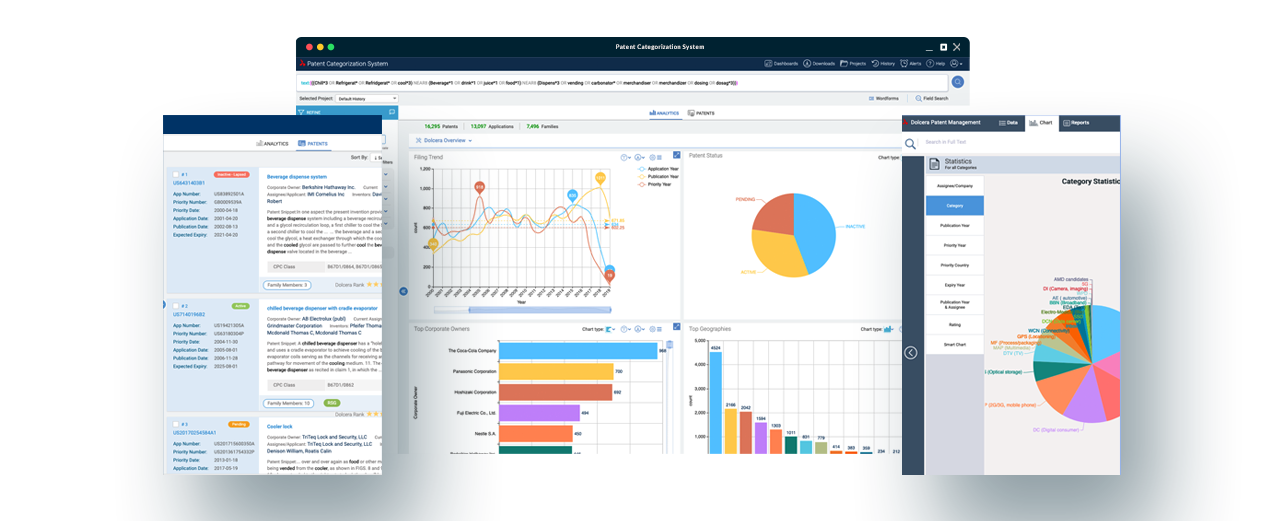
A quick mention of Dolcera’s patent dashboard is worth mentioning here. The patent dashboard has served as an early warning system for the in-house legal professionals of many Fortune 500 and Global 1000 organizations.
Most of these professionals would acknowledge that the lack of prior art information has led to any patent troll case. The patent dashboard’s collaborative feature makes it possible for sharing the prior art / product clearance searches within the organization.
Further, a regular analysis of patent portfolios of the known trolls within the industry and any closely-related industries can be pivotal in the prevention of a troll impact. The use of patent dashboard during the product design stage can ensure that all patents held by a known patent troll cannot be asserted in good faith against the products. In addition to this prevention measure, organizations can be well informed with the opinions on these patents held by patent trolls. Unlike many other contemporary tools, patent dashboard has been developed with active inputs from legal professionals from various organizations.
The issues sighted above are to prevent any possible attack from a patent troll; hence the need for in-house counsels to sift through a zillion patent documents and other scientific literature is well ascertained. Patent dashboard helps the legal professionals to structure the documents and also provides a solution to read only the relevant documents from the entire set. This aspect of the patent dashboard is critical for a legal professional at every strategic crossroads that seeks a very important decision.
This software has made it historical to exchange patent PDF documents through emails. Dolcera’s patent software holds all the relevant documents of the legal department in a central place for any in-house legal counsel to refer at any given time. The https enabled secure patent dashboard simply opens in any web browser. This award winning patent software helps in easy collaboration amongst geographically distributed teams inside large organizations.
“We had TMI — Too Much Information — going on here. This (Dolcera Dashboard) is a nice hybrid,” says says Michael Jaro, Chief Patent Counsel, Medtronic.
This patent analysis software aka patent dashboard has more to it. The rating and tagging feature of the document makes the future references of a document easy. The drag and drop feature further enhances the usability of the software.
“We have specific futuristic road-map carved out for the patent dashboard so that the lives of patent attorneys are made easy. At Dolcera, we believe that the current version of the patent dashboard is the first step towards making robust patent software” says Samir Raiyani, CEO of Dolcera.
The use of patent dashboard as described by one of the power users Mr Jaro himself “Each month, the Internet-based dashboard culls recent patent grants and applications from around the world and separates them by topic into different “buckets” so attorneys with different specialties don’t have to wade through irrelevant material. The culling is a result of both an automated search algorithm and human review performed by Dolcera’s Indian employees.”
“We have many tools to choose from, but there is more information out there than any single human being can feel comfortable digesting,” Jaro says. “This is just one way we thought we could do a better job of keeping up.”
The PharmaCI conference is scheduled to be held on 15th - 16th September 2009 at New York. Ed Rozenberg, one of the founders of Dolcera will present a talk on “Unlocking the hidden potential from the abandoned molecules. - A systematic CI driven approach!”
With the advancement of pharma industry there are two trends which we have witnessed that each company is focusing on a handful of therapeutic areas and exiting from other therapeutic areas resulting in “orphaned” and “abandoned” molecules. More so, many other companies are targeting smaller subpopulations in many therapeutic areas based on the latest scientific understanding.
Dolcera will unfold that how competitive intelligence can help to utilize the accumulated knowledge (clinical trials, toxicology analysis etc.) of the abandoned molecules to bring them to the market very quickly. The strategy will be a combination of scientific, market and patent intelligence to help unlock very valuable opportunities.
We sincerely hope that this presentation from us would help the research community from some of the world’s top pharma, biotech and health care companies such as Global Pharma Alliance, Zymogenetics, Pfizer, Boehinger Ingelheim, Roche Diagnostics to name a few.
We welcome all our blog readers to be part of this conference and contribute to the knowledge shared.
The US India IP conclave on Information technology organized at Taj Krishna, Hyderabad started on a low note with the news of death of YS Rajasekhara Reddy, Chief Minister Andhra Pradesh in helicopter crash on 3rd September 2009.
The two days event organized by CII (confederation of Indian Industry) in association with USPTO Global Intellectual Property academy soon started to blaze as reputed panelist, both Indian bureaucrats and members of US embassy started addressing the audience. Welcome address was given by Shakti Sagar, Vice Chairman CII_AP & MD ADP Inida Pvt LTd. Theme address was given by Dominic Keating, IPR Attaché where he applauded Indian IT industries for their contributions to Indian economy. He mentioned that IT business has grown from 150 million US $ in 1991 to 50 billion US$ in 2007 and is further expected to rise to 900 billion US $ by 2020. Hyderabad alone exports IT worth 163 billion US $ and has shown a growth of 323% from year 2002.
GS Ragahavender, Registrar of copyrights, Copyright office, Government of India in his key note address discussed about legislation, management and enforcement as three pillars to assure working of IP laws. Cornelis M Keur, Consul General, US Consulate admired Andhra Pradesh as third state after Maharashtra and Gujarat in terms of growth in Economy. Concluding remarks of the inaugural session was given by Dr. S Chakravarthy, IAS(R), Advisor-APTDC.
Soon after a short coffee break the conference resumed on special plenary: The digital dilemma: Intellectual property in the information age. Dr. A Garg, Director-IPR department of Information technology, Govt of India emphasized that SMEs (small and medium enterprises) has to play a leading role in innovation. Incubation parks, multiplier grand scheme, SIP-EIT (support international patent protection in electronics and IT) have been started by government to support innovation. Under SIP-EIT, a financial support of upto 50% of total patent processing cost including Attorney’s fees, patent office filling fees, examination fees, patent search cost and additional cost for entering national phase up to grant/issue will be given. The support will be in the form of reimbursement of expenses in actual to the applicant. Support will however be limited to Rs. 15 lakhs or 50% if the total incurred on filling each invention, whichever is less.
Prof M Sridhar Acharyulu, MHRD IP chair professior, NALSAR, Jennie Ness, Regional Inteleecual propery Attaché for South east Asia US embassy Bangkok and Madhukar Sinha, Prof-IPR, center for WTO studies, IIFT shared their knowledge on various dilemmas to be confront in the rapidly growing age of IT.
Third session on strategies for protection of incremental innovation and patentability of software: challenges for IT/software industry started after high-lunch. The session was mainly headed by corporate professionals enlightening on Indian, US and European laws on software patenting and copyrights. BLV Rao, VP- corporate affairs, Infotech enterprise Ltd initiated the session with a focus on incremental innovations. Dawn Jos, Pat Engg-Asia, Texas instrument was next speaker in the session. Himanshu Goswami, IP attorney, Microsoft India and Santanu Mukherjee, lead-IPR attorney, Qualcomm India discussed intrinsic details on IT and Indian patent article 3 (k), European article 52 (2), 52 (3) and US laws on software patenting.
Dominic Keating unfolded the legalities of patenting software and business methods in US. Anil Sharma, Knowledge scientist Dolcera took the stage and discussed one of the most talked about cases in US, “In re Bilski & its implications on software patents.” The presentation kindled interest amongst the audience from the word go. The talk showcased the research work that Dolcera had undertaken in collaboration with Medtronic in Bilski case and its impact on software, medical devices and pharma method patents.
The last session of the day was on open source software: who needs IP, was chaired by Venkatesh Hariharan, Director, corporate affairs, Redhat Asia-Pacific, Prof. KS Rajan, IIIT-Hyderabad and Pavan Duggal, leading advocate in the Supreme Court of India. The panelists presented their views on pros and cons of free software versus paid software in context of IP and public interest.
The conclave was a major success and big boost to the city of Hyderabad. The city being an IT hub and IPR industries and law firms already budding, conferences like such will enhance awareness amongst the professionals. Overall, the conclave was a great experience and CII - USPTO effort to increase IP awareness in India is definitely commendable.
Dolcera launches RNAi Database covering RNAi Agents from patented and scientific literature
The discovery of RNA interference (RNAi) is one of the transforming events in biology. Gene silencing agents such as small interfering RNA (siRNA), micro RNA (miRNA) and small synthetic oligo-nucleotides (DNA, RNA or DNA-RNA complex) lead to target specific RNAi. We aim at building a one-stop comprehensive database of RNAi agents patented or described in scientific literature.Dolcera has provision to customize the database against the target gene suiting client’s requirement. Till now, RNAi agents against some of the important cancer target genes are updated to the database and the trial access is available on request. These genes include bcl2, myc
(c-myc, n-myc), ras (k-ras, h-ras, n-ras), VEGF, STAT3 etc. RNAi agents can be extracted and added to the database based on client’s interest.
Dolcera RNAi database can prove helpful:
- For scientific community: RNAi agent sequences aligned to target genes, extensive experimental data and comparison matrix of data from different patents with same focus.
- For patent attorneys: Competitor watch, assignee vs. number of publications graphs, timeline based on application and publication dates.
- For venture capitalists/ Investors: Patent ranking based on disclosed information, data useful for decision making.
Salient features of the database:
- Interactive maps of taxonomy: 4 levels of in depth classification of patents and scientific literature allow both “bird’s-eye view” and “in-depth views” of technologies.
- Patent and non patent dashboard: Grouping specific elements into more general categories is conceptually easier and cleaner than entertaining hundreds of specific elements separately. Dolcera dashboard has a friendly user interface. It groups the patents according to the taxonomy, patent numbers, publications and application dates at the click of a button.
- Sequence Dashboard: The tool not only aligns all patented/ non patented siRNA/ miRNA sequences to the target gene but allow user to see the sequence related information on a simple click of the mouse.
- Experimental matrix: Experimental data be it quantitative (eg. % inhibition of target mRNA expression) or qualitative (eg. gel blots) are compared amongst patent document with similar focuses. This allows users to compare literature with same focus. The ranking of documents can also be done based on scoring matrices, which allows user to read the most relevant patent first.
For database related inquiries or free demo call us at, Phone: +1-650-269-7952 (US) and +91-40-6451-0832 (India). You can also email us at info@dolcera.com
To read more about RNAi database click here
To visit Dolcera’s website and to explore more patent/ IP related services click here
Dolcera has worked with Mike Jaro, the Chief Patent Counsel, to create the Patent Dashboard platform that is now used by dozens of Fortune 500 companies around the world.
Here is an article on InsideCounsel describing Medtronic’s requirements and the Dolcera-powered solution.
Some quotes:
“We have a lot of different technologies that we work with, and as the amount of patents has been escalating, it became more and more difficult to make sure we had good current awareness,” says Chief Patent Counsel Michael Jaro. “We had TMI—‘too much information’—going on here.”
“We knew we needed to do something different,” Jaro says. “We had tried machine-based categorization, but it was not altogether acceptable, because we were getting overinclusive or underinclusive lists.”
“Human beings are much better at categorizing documents into meaningful topics than machines are,” he says. “This is a nice hybrid.”
This is in continuation to my previous post on Patenting Landscape in India which could be read from the link given below
http://blogs.dolcera.com/blog/2009/07/18/patenting-landscape-in-india-a-view-on-patenting-trends-in-india-a-dolcera-analysis/
In this post the Analysis concentrates on finding the Top companies who have maximum publication in the Indian Patent Office. The Top Companies were searched for the patents published between 01st January 2005 -21st July 2009. The patents filed in all the 4 Indian Patent offices are considered
The Top 15 Companies

From the Graph one can conclude that Qualcomm leads in the race for Publications in the Indian Patent Office with 2118 publications followed by Philips Electronics and Council of Scientific and Industrial Research. Qualcomm deals with electronics and communication products. Since India is a major market for Mobile/ Cell phone, Qualcomm has a good advantage for its patents filed in India to get protection for its inventions
The Top Indian Assignees

From the Graph one can see that Council of Scientific and Industrial Research(CSIR) is the Top Indian Assignee when it comes to publications in India with 1541 publications followed by Hindustan Unilever Ltd. with 523 publications. But CSIR still trails with Qualcomm and hence it is necessary to encourage more research to be the Top patent filer in India.
Of the Top 100 Companies that Dolcera has analysed, 8 Indian companies happen to be in it while the rest of them are Foreign companies. It means 92 % of the Top publications in India are by MNCs. This scenario should be looked upon since the domestic Patent filers in other countries like the US, Japan, China are neck to neck with the International Filers. This should be seriously be looked upon by Indian Companies since it shows that most Indian companies concentrate/Invest only a small part of their budget to R&D activities. The Indian Government should also encourage Indian Universities to carry out R&D activities so that India could become a recognized country in R&D developments.
-Anil Sharma
Knowledge Scientist
Dolcera
© Dolcera 2009, All Rights Reserved. No part of this publication should be copied without the permission from the authour or from Dolcera.
Disclaimer: There can be manual errors and the author or the company(Dolcera) takes no responsibility for the damage caused due to the data provided.